SEO translations:
More traffic, more customers
Rank higher in the German market and increase your conversion rate with SEO-optimized translations


Did you know that a poor-quality translation can negatively impact rankings for the original website? That’s because Google assesses a website’s overall quality. With a typical translation, you’ll lose your keywords, writing style, and brand messaging—in other words, all the details that help win over your customers. But with an SEO translation, you get:

Keywords are everything when it comes to SEO and SEA. Without the right ones, your campaign will go nowhere. And it’s essential that the German keywords are researched carefully, too. Learn here why keywords can’t just be translated 1:1.

High-quality content is the most important ranking signal of all. If you want your website to be found, the content should be unique, reader-friendly, and tailored to your users. Google & Co., however, will penalize poor-quality translations in the search results.

German consumers see the world differently! A phrase that sounds clever or funny in the US or France might sound inappropriate or even insulting in Germany. To win people over, your content needs to be adapted for a German audience.
Leverage the full potential of international search engine optimization. With a carefully crafted SEO strategy for the German market, you’ll not only rank better; you’ll also increase your conversion rate and boost the impact of your online marketing campaigns. This helps you stand out from your competitors and creates a solid basis for long-term growth.
1. Keyword research
2. SEO translation
3. SEO optimization
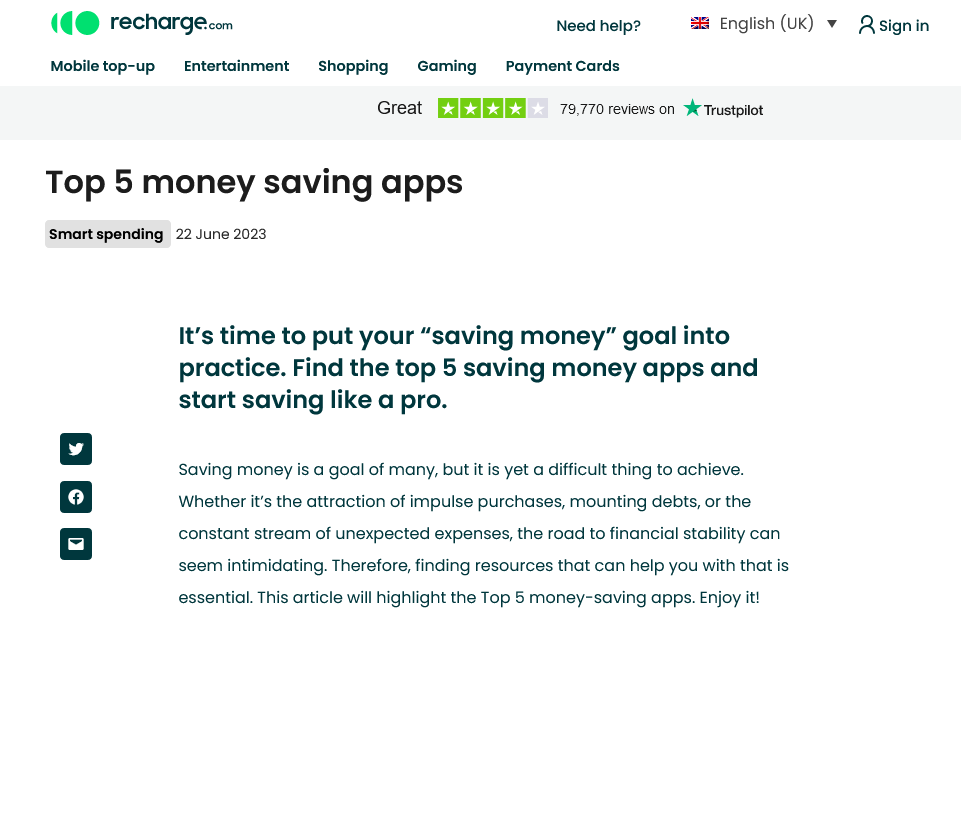
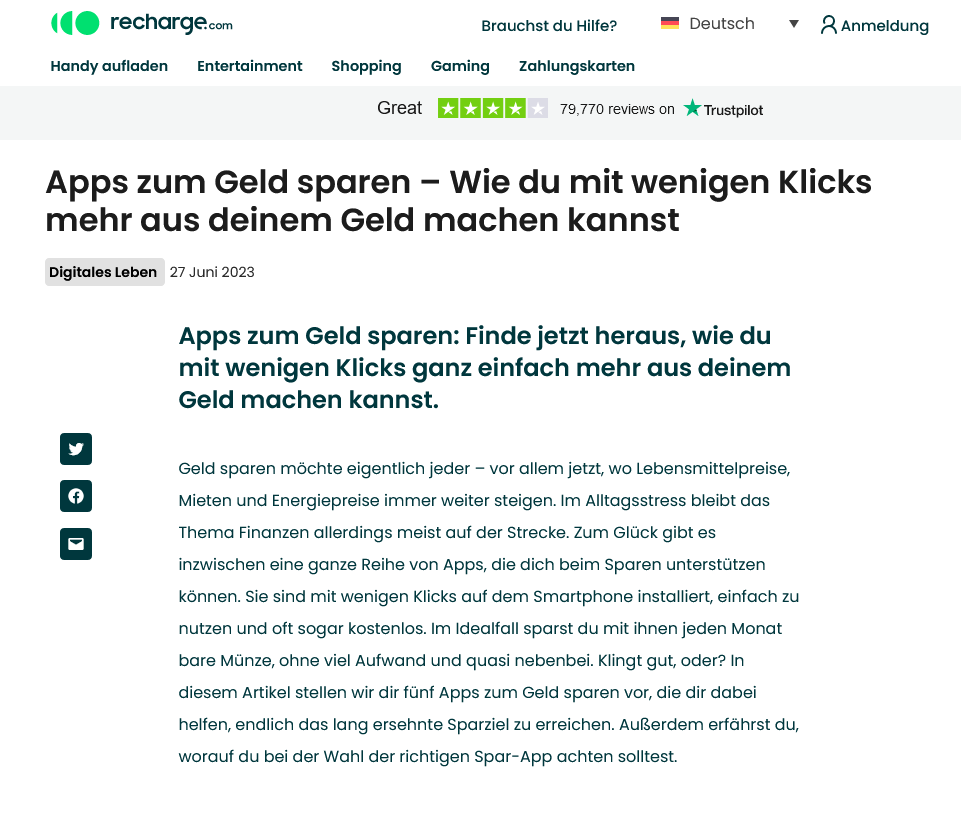
Example of a translated blog article, optimized for the German target audience and a better ranking.
According to John Mueller, Webmaster Trends Analyst at Google, a poor-quality translation will negatively affect a website’s ranking. And not just for the translated page! Because Google considers the overall quality of a website, a poor-quality translation can drag down the ranking of the entire website.
A website’s content is one of the two most important ranking signals for Google (along with backlinks). Your content needs to be high-quality, unique, and tailored to your users and/or their search intent. To put it simply: Google will see well-written content that meets users where they are and invites them to spend time on a website as a strong positive signal, which leads to a better ranking.
In a standard translation, the meaning of the text is simply transferred into another language. Everything besides the meaning (such as style, tone, and keywords) gets “lost in translation.” An SEO translation, on the other hand, transfers the meaning of the text into another language as well as optimizing the text for search engines and readers alike.
Transcreation goes beyond just transferring the meaning of the text into a new language. It recreates the experience of the original text with emotions, wordplay, and writing style. In other words, it keeps all the details intact that make a text interesting and enjoyable to read.
What does that have to do with SEO? To assess the quality of a website, Google analyzes users’ interactions with the page. These are known as user signals. The more a user interacts with a website, the better, which is why content quality plays such a critical role. If the text is translated carelessly, few people will keep reading. In fact, content that sounds like a translation could actually drive visitors away. On the other hand, well-written and/or transcreated content will capture readers’ attention and encourage them to delve deeper into the site.
When companies establish an international online presence, they use international search engine optimization to adapt their SEO strategy for different target markets. Each target market is analyzed separately, and the strategy is adapted for the country, the target group, and the local market dynamics.
SEO refers to strategies and tactics that help a website appear as high up in the organic search results as possible. A high ranking in the organic search results cannot be bought for money; the search engine always calculates it by analyzing certain criteria.
Search engine advertising (SEA), on the other hand, refers to running paid search ads and display ads. These are also shown in the search results, but they are marked as advertisements. Because the choice of keywords and use of targeted content is critical to the success of SEO and SEA efforts, SEO translations play a key role in both types of marketing.