Transcreation:
Background knowledge
Helping creative texts go global
“Kids and grown-ups love it so… the happy world of Haribo!” The Haribo slogan is known throughout the English-speaking world. It’s clever, it rhymes… and it’s a transcreation. The original German slogan “Haribo macht Kinder froh… und Erwachsene ebenso” is similar in meaning, but they aren’t exact translations of each other. Why not?
Because a 1:1 translation wouldn’t rhyme in English, or sound nearly as catchy. Instead, the basic idea of the German slogan was used as the basis for creating a new English slogan. This approach makes Haribo’s marketing efforts far more effective.
Creating something new that stays true to the original is the key principle behind creative translation. The process is also known as transcreation: a combination of translation and creation. A creative translation is the right choice whenever the “how” of your text is just as important as the “what”—when emotions come into play, when play-on-words are involved, or when the writing uses particular stylistic elements.

Work sample
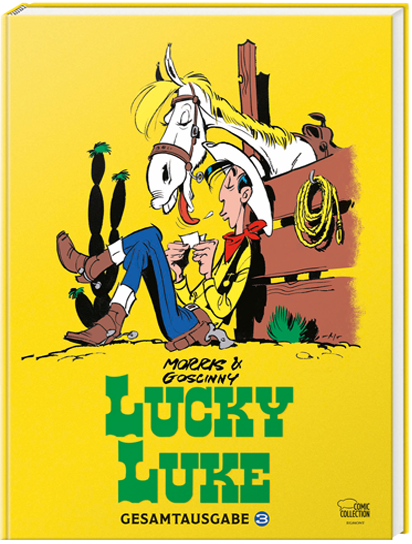
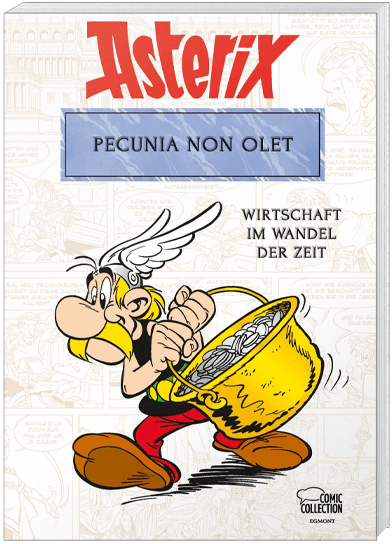
Translation of the foreword to volume 3 of the complete edition of Lucky Luke and an Asterix book on economics. Both non-fiction texts are in the field of comics and therefore required a special degree of creativity.
Types of text
The same effect in different words
The goal of an adaptive translation is to convey the intention, emotion, and context of the original text in a new language. To do this successfully, translators may interpret the text more freely. The types of text that often need creative translation include:
- Headlines
- Ads
- Slogans
- Claims
- Longer marketing texts
- Literary texts
Slogans are a particular challenge because they need to be short and catchy. Incidentally, comics pose the same challenge. The translation not only needs to convey the same information and humor as the original—it also needs to fit into the same speech bubble.
FAQ
What is transcreation?
The term transcreation is a combination of the words “translation” and “creation. Transcreation aims to transfer a text into a different language, creating the same effect on the reader in a new cultural context.
Here’s an example: A joke involving a typical German food would probably not work in the US, because no one is familiar with the food—and the other way around. For the joke to stay funny, it needs to be adapted to the new culture. Nina Sattler-Hovdar defines transcreation as translation followed by strategic, creative rewriting of the text. Unlike a standard translation, the end result can be fairly far removed from the original.
When is creative translation the right choice?
A creative translation is the right choice when the way something is expressed is just as important as what is expressed. In other words, whenever a text has a goal that goes above and beyond sharing information. Here are some examples of texts that typically require creative translation:
- Advertising and marketing texts that should win over potential customers and build trust
- Corporate communication that should motivate employees
- Humorous texts that should make people laugh
How do creative translation and machine translation fit together?
Machine translation can be the first step used to create a raw translation of the text. This raw translation is used as a basis for the rest of the translator’s work. AI can also be used as a sounding board or brainstorming partner. This doesn’t necessarily speed up the translation process, but it can lead to a better end result.